|
In memoriam: Douglas J. Klein (1942–2026)
|
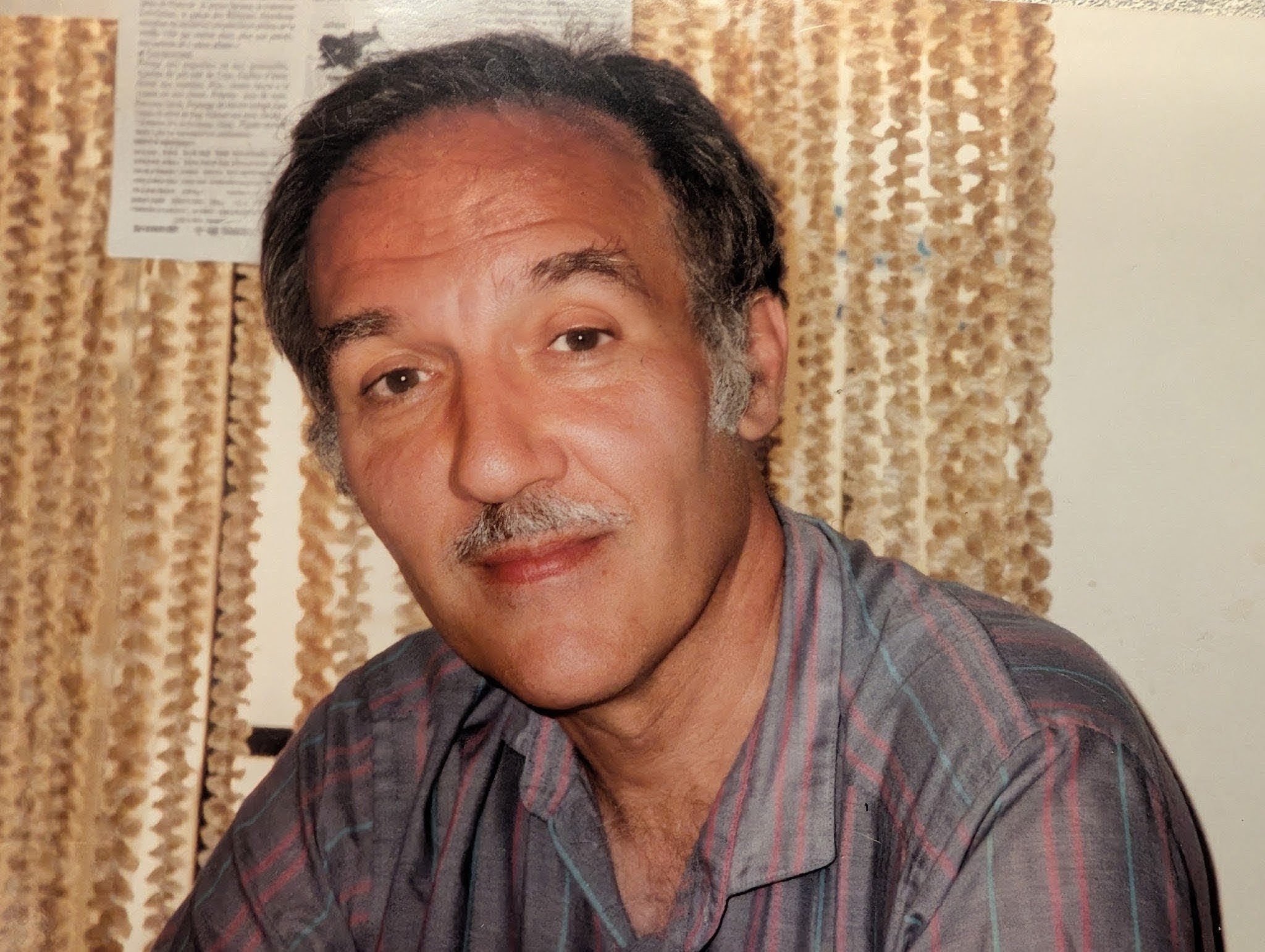
D. J. (Doug) Klein was a theoretical chemist (who might have preferred to be remembered as just a "scientist"). He wrote more than 400 papers; a comprehensive bibliography with his first 380 papers and two edited collections up to 2012 can be found in Croatica Chemica Acta.
Given Klein's continuing interest in valence bond theories, it might be significant that Klein grew up in Oregon, home also to Linus Pauling; both Klein and Pauling received undergraduate degrees from Oregon State University. Klein received a Ph.D. in chemical physics under F. A. Matsen at the University of Texas (U.T.) in 1969. He spent most of the following decade in post-doc, visiting, or contingent positions at Princeton, Rice University, the University of Cologne, and the physics department at the University of Texas. He first met Bob Curl, who later shared a Nobel prize for discovering fullerenes, during this stint at Rice. In 1979 he took the position at Texas A&M University, Galveston (TAMUG), he would stay at for the rest of his career.
Klein was in the Marine Sciences department at TAMUG. While there were no chemistry, physics or mathematics departments at this TAMU campus, he formed a very successful and prolific research group which, for instance, first formulated the hypothesis and a justification that stable fullerenes should have isolated pentagons. While there were no graduate students or advanced classes he maintained a steady stream of high-level visitors that stayed for months or years including A. T. Balaban, D. Bonchev, T. Došlić, A. Graovac, I. Gutman, H. Hosoya, N. H. March, M. Randić, E. Ruch, T. H. Seligman and N. Trinajstić with the support of the Welch Foundation. In 1994 Klein spent the year with March at Oxford University on a Fulbright fellowship.
Klein appreciated the importance and utility of a variety of computations in support of his research. His advisor Matsen was a signatory of a 1955 Molecular Quantum Chemistry conference recommendation that governments support high-speed computing resources for "molecular problems". Matsen had the first computers at U.T. and would share these with researchers in other departments. Klein loved to repeat the story about U.T.'s President calling Matsen in to ask about U.T.'s computers and learning these were Matsen's computers! Matsen then helped create U.T.'s first computer lab.
Klein was a high-powered user of a wide variety of mathematical tools including random walks, double cosets, transfer matrices (for enumeration), partially ordered sets, graph theory and especially linear algebra (his favorite theorems included Gershgorin's Disk theorem and Sylvester's Inertia theorem). His paper (with Randić, cited more than 800 times) on "resistance distance" is chemically motivated but really a purely mathematics paper; they prove that if the edges of a graph are view as unit resistors, the resistance between any pair of vertices is actually a graph metric. Klein also knew a number of surprising, and mathematically equivalent, graph metrics.
Klein had a deep knowledge of the history of science. He seemed to have internalized the early history of quantum applications to chemistry. He often told stories about J. W. Gibbs and G. N. Lewis (he thought both were mistakenly overlooked for Nobel prizes) and other scientists. Klein often referenced mostly forgotten ideas (even 19th century work) in chemistry that he thought were still worthwhile in his papers. While this added flavor to his papers, Klein thought it was important both to credit the ideas of others and to position new ideas within the tapestry of the history of ideas.
Klein was incredibly supportive of his collaborators and generous with ideas and credit. Besides providing funding for visitors he often put them up in his own house. Klein was an avid hunter of used books (he had an enormous scientific library) and would often buy books he already owned and loved to present to collaborators. One that he bought repeatedly was E. Bright Wilson's Introduction to Scientific Research.
Klein was a committed teacher. He was a prolific author of notes for his students, wrote an unpublished text on environmental modeling for a TAMUG class he regularly taught and a number of expository articles aimed at chemistry students. He liked to give a quiz on Texas and U.S. history on the first day of his classes (questions included, "What president finally got around to bring metric legislation before the U.S. House for adoption?" It was Lincoln!)
At the end of his career Klein was pleased to have received external recognition. In 2015 he was appointed a Texas A&M University Regents Professor (Curl, Roald Hoffmann and Harold Kroto wrote recommendation letters), and in 2023 he received the American Chemical Society's Joe W. Hightower Award.
Craig Larson
|
In memoriam: Professor Zhang Fuji (1936–2026)
|
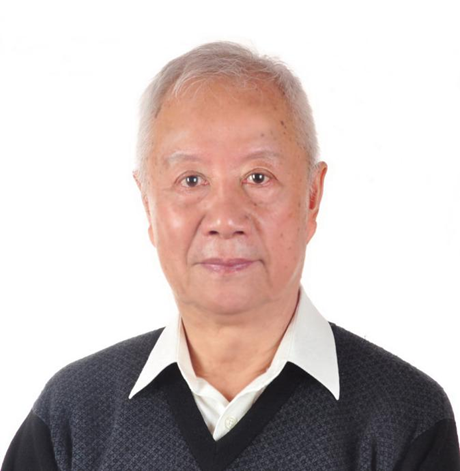
It is with profound sorrow that we mourn the passing of our beloved teacher, Professor Zhang Fuji. We, his
grateful students, offer this tribute in remembrance of a scholar whose devotion to mathematics,
unwavering integrity, and generous mentorship profoundly shaped our lives.
Professor Zhang was born in Chengdu, Sichuan Province, in 1936 and graduated from Beijing Normal
University in 1962. From an early age, he cultivated a deep love of learning and scientific inquiry. Although
his life was marked by extraordinary hardship, he remained steadfast in his pursuit of mathematics. During
the difficult years spent on China's northwestern frontier, he continued his research under challenging
conditions with remarkable perseverance and quiet determination. His poem The Valley, in which hardy
plants growing among rocks symbolize resilience in adversity, reflected the strength of character that
accompanied him throughout his life.
Upon the recommendation of the renowned mathematician Professor Hua Luogeng, Professor Zhang
joined Xinjiang University, where he devoted himself to building a vibrant mathematical research
environment. He promoted academic exchange, established graduate education in mathematics for
students from ethnic minority communities, and helped lay the foundation for the continued development
of mathematics in Xinjiang. After moving to Xiamen University, he devoted himself fully to research and
teaching, making lasting contributions to the University's mathematical sciences through both his
scholarship and his guidance of younger generations.
Professor Zhang was among the early pioneers of graph theory, combinatorics, and mathematical
chemistry in China. His pioneering research opened new directions in mathematical chemistry, statistical
physics, and knot theory. The Zhang–Zhang Polynomial and the Z-transformation graph that he introduced
have found wide application in mathematical chemistry and matching theory. His work received broad
recognition, including the First Prize of the Fujian Provincial Science and Technology Award, and he was
among the first Chinese scholars elected to the International Academy of Mathematical Chemistry. Special
commemorative issues published by Journal of Xinjiang University, MATCH Communications in Mathematical
and in Computer Chemistry, and Discrete Applied Mathematics on the occasions of his seventieth, eightieth,
and ninetieth birthdays reflected the high esteem in which he was held by colleagues and friends.
To us, Professor Zhang was, above all, an exceptional teacher. He revealed to us the beauty of mathematics
and inspired us to pursue scholarship with honesty, perseverance, curiosity, and humility. His influence
reached far beyond the classroom. Through his example, he taught us not only how to conduct research,
but also how to face difficulties with courage, treat others with kindness, and remain faithful to the ideals of
scholarship. He created an academic family whose members continue to benefit from the values that he
instilled.
Outside mathematics, Professor Zhang was warm, thoughtful, and generous. He remained optimistic
despite life's many challenges and approached both scholarship and daily life with grace and humility. His
lifelong love of swimming reflected the openness, vitality, and quiet resilience that characterized his spirit
throughout his distinguished life.
As his students, we mourn the loss of a beloved teacher and express our deepest gratitude for everything
he gave us. His writings, his ideas, and the generations of students whom he inspired will continue to bear
witness to a life devoted to mathematics and education. We shall always cherish his example and strive to
uphold the scholarly values that he so faithfully embodied.
May Professor Zhang Fuji rest in peace. His legacy will endure in the mathematical community, and his
memory will forever remain in our hearts.
9 July 2026
On behalf of his grateful students
|
In memoriam: Pierre Hansen (1940–2025)
|
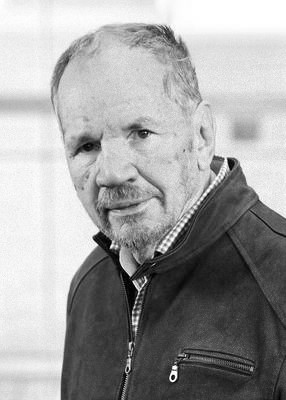
Pierre Hansen was a professor at HEC Montréal and a researcher at GERAD in Canada since the early 1990s, fellow of the Royal Society of Canada since 1999, and a member of IAMC since its inception in 2005.
His most recognizable achievement is certainly the development of the Variable Neighborhood Search (VNS) metaheuristic, together with the late Nenad Mladenović. VNS proved to be a rather versatile metaheuristic, successfully applicable to a wide range of problems in operations research, that even has its own biannual conference dedicated to it. Pierre and Nenad's original 1997 VNS paper has been cited more than 3,300 times in the literature, while two additional VNS papers on its principles (2001) and its methods (2010) were further jointly cited more than 2,300 times.
Pierre's special “pet” project was the application of VNS in graph theory, where the graph theoretical bounds and inequalities were reformulated as optimization problems for which VNS was employed to find extremal graphs. This long-term project led to the development of the software AutoGraphiX with Gilles Caporossi, computer-assisted enumeration of conjectures relating various pair of graph invariants with Mustapha Aouchiche, as well as a collaboration with a large number of graph theorists and mathematical chemists throughout the world on proving or disproving these conjectures, which resulted in a lengthy series of more than 25
“Variable neighborhood search for extremal graphs” papers.
I was lucky enough to meet Pierre back in 2001, still in the early stages of his VNS-for-graphs project and to collaborate with him on AutoGraphiX conjectures involving invariants from spectral graph theory. Pierre was especially proud that AutoGraphiX was often able to find extremal graphs that did not belong to previously known families. Here are instances of two aptly named families from our joint paper “On bags and bugs”:
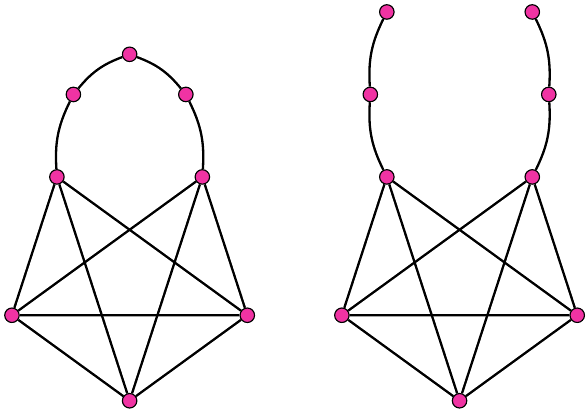
where bags (left) serve as the graphs with maximum spectral radius among graphs with fixed numbers of vertices and (usual) radius, while bugs (right) serve as the graphs with maximum spectral radius among graphs with fixed numbers of vertices and diameter.
We worked together on similar problems over a number of years, and during that time I was able to find out that, although naturalized Canadian, Pierre was foremost a true Belgian gentleman and a law abiding citizen, not unlike Hercules Poirot from time to time. He was very proud of his Belgian roots and some fine Belgian products: chocolate pralines, comics, or double and triple beers, which we studied in sufficient detail while visiting Universite Libre du Bruxelles together. Pierre was a true jazz afficionado, so that many discussions were held listening to old recordings from his collection or visiting live shows, one of the highlights being Harry Manx's rendition of “The thrill is gone” on a sitar at a blues festival in Peer…
Pierre was a kind and generous person who gave us a lot of good things in his life. May now God give a lot of good things to his soul.
Dragan Stevanović
|
Obituary: Serge S. Tratch (17. 9. 1946 – 17. 7. 2023)
|
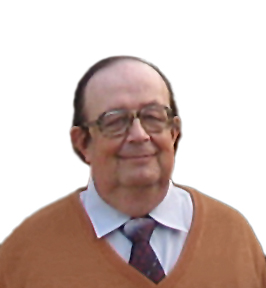
With great sadness, we inform that
Dr Serge S. Tratch
passed away on July 17, 2023.
His entire life from a student to leading researcher was associated with the Lomonosov Moscow State University. After graduation, he started his career as a synthetic organic chemist, but then in 1974 he switched to mathematical chemistry and, working with Professor Nikolay Zefirov, commenced the development of the principles of the formal-logical approach to organic reactions. As a result, a large series of papers was published on the applications of the formal-logical approach to multi-center processes with cyclic electron transfer, to tautomeric processes with new topologies, to the generation of equations characterizing ionic, radical, and redox processes, to organic processes with open and linear-cyclic bond redistribution topologies. Finally, symbolic equations were introduced and their applications to reaction design were discussed. The proposed approach allows easy generation of new types of organic reactions with various bond redistribution topologies using computer programs developed by Dr Tratch, his colleagues and students. Dr Tratch also had suggested new topological indices, introduced a number of mathematical models in stereochemistry, and solved many other important problems in the field of mathematical chemistry.
Dr Tratch was a member of IAMC since its foundation in 2005 and actively participated in several IAMC meetings.
He was our friend and colleague, a very pleasant and nice person. The cherished memory of Serge Tratch will remain forever in our hearts.
We express sincere condolences to his family and friends.
|
IAMC meeting 2023
The IAMC 2023 meeting will be held on Thursday, June 22, 2023, in Kranjska Gora, Slovenia.
The meeting of the IAMC will be a hybrid Satellite Event of the 10th Slovenian Conference on Graph Theory (SiCGT 2023): https://sicgt.si/satellite-events
Those wishing to attend in person should register at: https://sicgt.si/registration
This will include a dedicated Minisymposium on Chemical Graph Theory, where members of IAMC and others may present talks and,
if they wish, submit their papers to DMC, a new peer-reviewed scientific journal that we established. Those members who are unable
to attend the Academy meeting in person (or do not wish to pay the conference fee) have the opportunity to attend the meeting free of charge via Zoom.
The meeting will be held from 11:30 to 12:20 (Central European Summer Time). The Zoom link will be sent via email to prevent Zoombombing incidents.
|
In memoriam: Alireza Ashrafi (1964–2023)
|
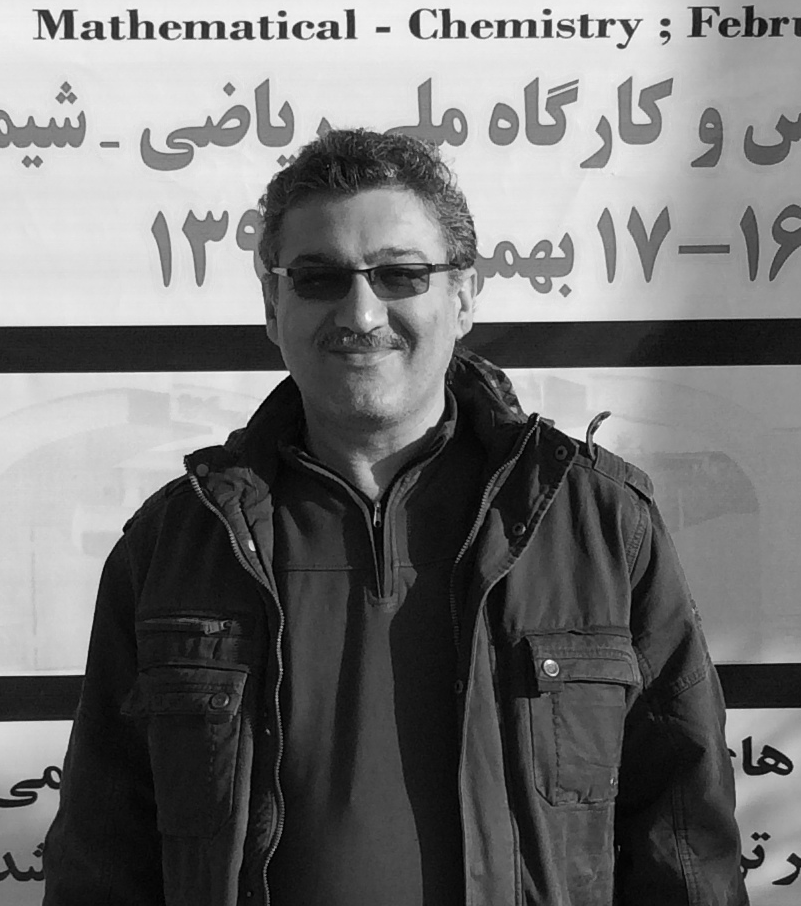
On January 9, 2023, we were all shocked and saddened by the news of a premature and tragic departure of our colleague, friend and teacher, Alireza Ashrafi. His life was cut short by a reckless driver who hit Alireza while he was crossing a street on his way home.
Alireza Ashrafi was born in 1964. After graduating at Kharazmi University in 1988, he obtained his MSc degree at the Shahid Beheshti University in 1990 and then earned his PhD degree in computational group theory in 1994 from the University of Tehran. He spent most of his career at the Department of Mathematics of University of Kashan in Kashan, teaching numerous courses, mentoring dozens of MSc and PhD students, writing hundreds of papers, starting and managing several journals, and, along the way, opening vast new areas of research for his students and colleagues.
This note cannot do justice to all of Alireza's work and achievements. One of the reasons is that I am not knowledgeable enough about several areas of his work. The other, more important, is that there is so much of it that it is difficult to obtain exact, or even approximate, numbers of papers, conferences, coauthors and PhD students. Hence, I will restrict myself to my personal impressions and recollections, in particular those relevant for his activity in the areas of mathematical chemistry and chemical graph theory.
I first met Alireza in April 2009, when he invited me to Kashan to the second in series of conferences and workshop in mathematical chemistry. My first impression, of a kind and gentle man, was amply reinforced by our subsequent interactions. Along with it, during our collaboration on several papers and research projects, grew also my respect for his scientific prowess. Above all, I was impressed by his respect and affection for his many PhD students, the feelings which were reciprocated by each and every of them.
The next year, 2010, saw the appearance of the first issue of the Iranian Journal of Mathematical Chemistry, a new journal serving the dynamic and rapidly growing area devoted to applications of discrete mathematics to problems of interest in chemistry. As its spiritus movens and its Editor-in-Chief, Alireza managed to keep and preserve a delicate balance between the opposing forces of the sterile ivory-tower elitism and greedy publish-or-perish culture. The journal grew in both quality and prestige and became a standard venue for publishing timely and relevant research. Similar success has been in making for Mathematics Interdisciplinary Research, another scientific journal Alireza helped to start and manage a couple of years later.
Alireza's great contribution to mathematical chemistry was recognized by his election to the International Academy of Mathematical Chemistry, where he actively participated in its governing bodies and served for one term as its vice-president.
Alireza left a great legacy both as a scientist and as a teacher. He was at his best by combining both roles. By sharing his network of international collaborators with his students, and by sharing his circle of young and talented Iranian mathematicians with his foreign colleagues, he has created a vibrant and closely-knit community of researchers which helped to make Iran not only visible but also a prominent actor in
the global mathematical chemistry community.
To finish on a very personal note, I will be always thankful to Alireza for his first invitation. He and other Iranian colleagues opened to me not only their hearts and homes, but also a window into the soul of Iran, allowing me thus to fall in love with the country and with its people.
Thank you, Alireza, and may your soul rest in peace.
Tomislav Došlić
|
Chemical Graph Theory Conference,
Sombor, Serbia, June 3–5, 2022
|
The Mathematical Institute of the Serbian Academy of Sciences and Arts, the Faculty of Sciences of the University of Kragujevac and the Department of Mathematics, Physics and Geosciences of the Serbian Academy of Sciences and Arts are jointly organising an international conference on chemical graph theory in Sombor, Serbia from June 3–5, 2022.
The conference is primarily organised to celebrate recent introduction of the codes 05C09 Graphical indices (Wiener index, Zagreb index, Randić index, etc.), and 05C92 Chemical graph theory in the Mathematics Subject Classification 2020, which recognise chemical graph theory as an independent subject area within graph theory.
The conference will be held in Sombor, Serbia. While Sombor is already well known for its greenery, cultural life and beautiful historical city center, it is quickly becoming famous among chemical graph theorists also for the recently introduced Sombor index.
Conference website:
https://sites.google.com/view/cgtc2022
|
Seminar for Biomathematics and Mathematical Chemistry
|
Monthly research seminar for biomathematics and mathematical chemistry is intended for formal and informal acquaintance with the latest achievements in the fields that intertwine the use of mainly discrete mathematical and computer methods in chemistry and biosciences. At the seminar, researchers and doctoral students report on their results. On the other hand, it also enables informal meetings of those interested in joint research work on concrete open problems.
Announcements: https://www.famnit.upr.si/sl/raziskovanje/seminarji/ma-bio-seminar
If you would like to contribute a talk, please contact Dr Nino Basic via email.
|
IAMC meeting 2019
The IAMC 2019 meeting will be held on June 27 and June 28, 2019, in Bled, Slovenia.
The meeting will be a satellite event of the 9th Slovenian International Conference
on Graph Theory - Bled'19: https://conferences.matheo.si/event/28/
The conference venue for both events is Hotel Kompas, Bled.
|
IAMC meeting 2016
The IAMC 2016 meeting will be held in Tianjin (China), July 4-8, 2016. Details
can be found here: http://www.combinatorics.net/conf/iamc2016/
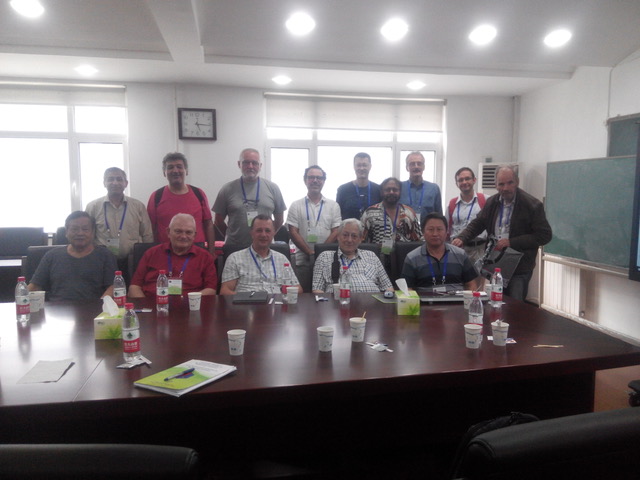
Who is on the photo? Front row (left to right): Xiaofeng Guo, Ivan Gutman, Bojan Mohar, Michel Deza, and Xueliang Li. Back row (left to right): Ali Iranmanesh, Alireza Ashrafi, Tomislav Došlić, Ernesto Estrada, Sandi Klavžar, Subhash C. Basak, Paul Mezey, Damir Vukičević, and Pierre Hansen. |
IAMC meeting 2015
The IAMC 2015 meeting will be held in June in Kranjska Gora (Slovenia). The web page
of the meeting is: iamc15.imfm.si
After the finish of the IAMC meeting, in the same place the 8th Slovenian International Conference on Graph Theory will take place: kg15.imfm.si |
Lifetime achievement award to Subhash Basak
The department of chemistry of the Aliah University awarded the IMAC member Subhash Basak for his lifetime achievement in the field of mathematical chemistry.
|
News from Split 2014
The IAMC 2014 meeting was held in Split (Croatia), from June 8 until June 10, 2014.
The election for the new IAMC board (2014– 2016) was held with the following results:
President:
Milan Randić
EU vice-President: Sandi Klavzar
America vice-president: Douglas J. Klein
Asia vice-president: Xueliang Li
Secretary: Damir Vukičević
Treasurer: Dejan Plavšić
Past-President: Roberto Todeschini
Past-President: Alexandru T. Balaban
During the works of the Academy, four new Members were elected:
Mihai V. Putz (Roumania)
Guillermo Restrepo (Colombia)
Tomislav Došlić (Croatia)
Heping Zhang (China)
|
New tutorial section
A new section with tutorials and examples uploaded by the IAMC members havs been added to the web site, explore it here. |
Minutes of Bled 2011
the minutes of the IAMC 2011 meeting (Bled, Slovenia) are available as pdf file here. |
News from Bled 2011
The seventh IAMC meeting was held in Bled (Slovenia) in 19-22 June 2011.
The election for the new IAMC board (2011 – 2013) was held with the following results:
President: Roberto Todeschini
Vice-President: Edward Kirby
Vice-President: Sandy Klavzar
Secretary: Ante Graovac
Tresurer: Drazen Vikic-Topic
During the works of the Academy, five new Members were elected:
Vladimir Batagelj (Slovenia)
Xueliang Li (China)
Nenad Raos (Croatia)
Kurt Varmuza (Austria)
Peter Willett (UK)
|
New books
Series: Carbon Materials: Chemistry and Physics
Vol. 4
The mathematics and topology of fullerenes
Cataldo, Franco; Graovac, Ante; Ori, Ottorino (Eds.)
1st Edition., 2011, 289 p.,
Springer,
all details here
Mathematical methods and modelling for students of chemistry and biology
Graovac, Ante; Gutman, Ivan; Vukičević, Damir (Eds.)
2009, 271 p.,
HUM naklada d.o.o.,
ISBN 978-953-6954-40-7
|
MATH/CHEM/COMP 2011
The 26th MATH/CHEM/COMP 2011 COURSE & CONFERENCE will be held
in Dubrovnik, Croatia, from June 13-18, 2011. Further information here: http://mcc.irb.hr |
New books in the Mathematical Chemistry Monographs
Novel Molecular Structure Descriptors - Theory and Applications I. Novel Molecular Structure Descriptors - Theory and Applications II
Editors: Ivan Gutman and Boris Furtula
University of Kragujevac, Kragujevac, Serbia
Further details can be found here: http://www.pmf.kg.ac.rs/match/mcm.htm |
New members of the International Academy of Mathematical Chemistry
At the 5th Meeting of the International Academy of Mathematical Chemistry (Dubrovnik, June 14-16 2009), Igor. I. Baskin (Russia), Viviana Consonni (Italy), Douglas M. Hawkins (USA) and Joan Tomescu (Roumania) have been elected as new members of the Academy.
|
Awards granted to IAMC members
The "International Award Latium Between Europe and the Mediterranean for Medicine, Physics or Chemistry" was granted in Rome in the year 2006 to
Dejan Plavsic, the former Treasurer of the IAMC, for his contributions to graph theory and molecular topology. His papers published in "Chemical Physics Letters" are awarded by this journal as two of its most cited fifty papers in the period from 2003-2007.
The Annual Award of the Republic of Croatia for Science in 2008 was granted
to Ante Graovac, the Secretary of the IAMC, for his achievements in sciences,
especially to mathematical chemistry.
|
Distance-descriptors in whose development István Lukovits has been involved
A recent paper
by Bono Lučić, Sonja Nikolić and Nenad Trinajstić has been published. It is a brief review of various molecular descriptors based on graph-theoretical distances, with a special emphasis on those distance-descriptors in whose development István Lukovits has been involved.
Distance-Related Molecular Descriptors
Bono Lučić, Sonja Nikolić, and Nenad Trinajstić
Internet Electronic Journal of Molecular Design, 2008, 7, 195-206
pdf reprint: http://biochempress.com/Files/iejmd_2008_7_0195.pdf
web site: http://biochempress.com/av07_0195.html |
MCC 2009 Course & Conference
MCC 2009 Course & Conference will be held in Hotel "Lero" (Dubrovnik), June 8-13, 2009. All informations on the meeting are to be found at: http://mcc.irb.hr |
|